
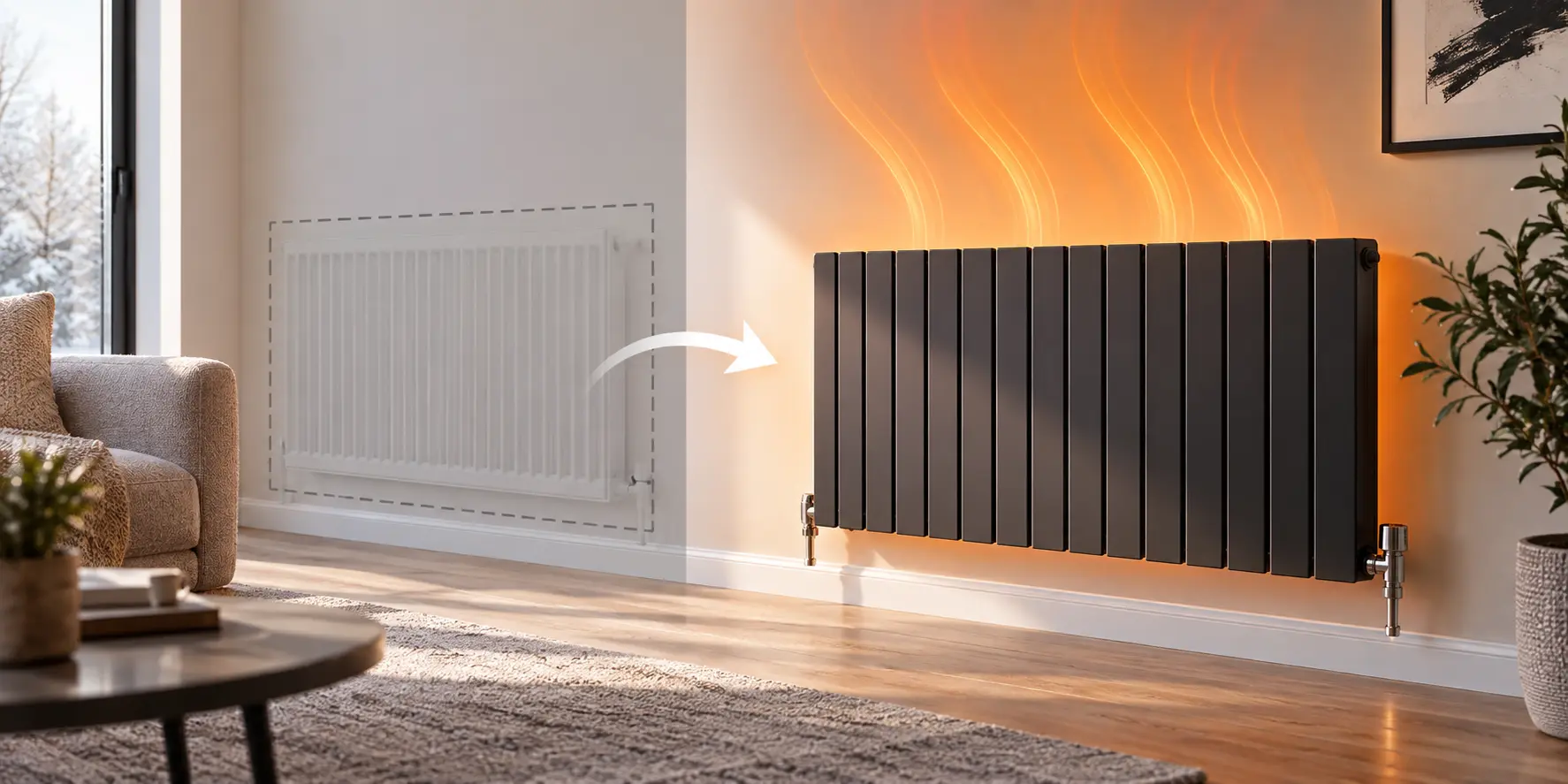
There is a particular kind of frustration that comes from a room that never quite warms up. The radiator is on. The boiler is working. The thermostat says the heating is running. And yet you are still reaching for a jumper at seven in the evening. Nine times out of ten, the radiator simply is not big enough for the room, and the obvious fix, a bigger radiator, is the one thing the wall will not allow.
This is where high output radiators earn their keep. They are designed to push considerably more heat out of the same footprint, which means you can solve a cold room without knocking through, losing a wall or redesigning the layout around a three metre panel.
What Actually Makes a Radiator High Output
Heat output is measured in BTUs, British Thermal Units, per hour. Two radiators of identical size can have wildly different BTU figures depending on three things: the material they are made from, how many surfaces they present to the air, and how efficiently they move air across those surfaces.
Aluminium conducts heat far faster than steel, so an aluminium radiator reaches temperature quickly and throws out more heat for its weight. Column radiators work differently, winning on surface area, because every additional column adds another set of heated faces for air to travel past. A six column radiator has roughly three times the heated surface of a two column of the same height and width.
The practical result is that you can often double the output of a wall space without changing its dimensions at all.
How Much Heat Do You Actually Need?
Before shopping by BTU, work out the target. A rough rule for a reasonably insulated modern living room is around 5 BTUs per cubic foot, rising for rooms with large windows, external corners, or solid walls with no cavity insulation.
| Room | Typical size | Rough BTU target | Usual problem |
|---|---|---|---|
| Living room | 4m x 4m | 6,000 to 8,000 | Bay window heat loss |
| Kitchen diner | 5m x 4m | 7,000 to 9,000 | No spare wall space |
| Open plan space | 7m x 5m | 12,000 to 16,000 | Needs two or more units |
| Conservatory | 3.5m x 3m | 8,000 to 11,000 | Glass on three sides |
If you want a proper figure rather than an estimate, our BTU calculator takes window type, wall construction and room use into account, and there is a fuller walkthrough in our guide to working out what size radiator you need.
The Three Routes to More Heat
1. Switch to Aluminium
Aluminium is the quickest win for output per centimetre. It also heats up and cools down fast, which suits homes where the heating cycles on and off rather than running steadily. The trade off is that it loses heat as quickly as it gains it, so a room can feel cooler sooner once the boiler stops.
2. Add Columns
If you like the traditional look, column radiators scale beautifully. Moving from two columns to four roughly doubles the output. Moving to six adds more again. The radiator gets deeper rather than wider, so your wall length stays the same and only the projection into the room changes, usually by a few centimetres.
3. Go Vertical
Where floor level wall space has run out, height is the answer. A 1800mm tall radiator uses a slice of wall that furniture rarely occupies, and a double panel vertical in aluminium can comfortably exceed 5,000 BTUs on its own.

Bradford Vertical Aluminium
Tall, slim and aluminium, for narrow walls that need serious output.
View the Bradford range
Multi Column Custom
Add columns for output without adding a single centimetre of wall.
Build one to size
Horizontal High Output
For under window runs where height is limited but length is not.
Compare by outputThe Mistake Almost Everyone Makes
People shop for the highest BTU number they can find and stop there. Output figures are quoted at a specific temperature difference, usually Delta T50, which assumes your system runs at around 75 degrees flow. Plenty of modern condensing boilers are set to run cooler than that, and heat pumps run cooler still.
If your system runs at a lower flow temperature, a radiator quoted at 6,000 BTUs might deliver closer to 3,500 in practice. Always check which Delta T a figure refers to before comparing two radiators, and size up if your boiler runs cool.
Where High Output Radiators Make the Biggest Difference
Some rooms are simply harder to heat than others, and these are the ones where a high output unit changes the experience rather than just nudging the thermometer.
- Conservatories and garden rooms, where glazing loses heat faster than any wall.
- Kitchen diners, where wall space is taken by units and the only option is a short, hard working radiator.
- Converted lofts, with sloping ceilings, limited wall height and often poor insulation behind the plasterboard.
- Period homes with solid walls, high ceilings and original sash windows.
- Open plan spaces, where one radiator is rarely enough and two high output units beat four standard panels.
If your cold room is a large open space rather than a single awkward corner, our guide on heating large open plan areas covers how to split output across a room properly.
Frequently Asked Questions
What counts as a high output radiator?
There is no official threshold, but as a working guide anything delivering more than roughly 5,000 BTUs at Delta T50 from a single unit sits in high output territory. What matters more is output relative to size. A radiator producing 4,000 BTUs from a 600mm wide space is doing far more work than one producing 6,000 BTUs across two metres of wall.
Do high output radiators cost more to run?
Not inherently. A radiator does not consume energy itself, it releases heat your boiler has already produced. A correctly sized high output radiator often costs less to run than an undersized one, because the room reaches temperature faster and the thermostat shuts the system off sooner instead of running constantly and never quite getting there.
Can I fit a high output radiator to my existing pipework?
Usually yes. Most high output radiators use standard 15mm connections and the same pipe centres as the radiator you are replacing. The thing to check is whether your boiler has enough capacity overall. If you are significantly increasing output across several rooms at once, it is worth having an installer confirm the system can supply it.
Is aluminium or a column radiator better for high output?
Aluminium gives the best output for its size and warms up fastest, which suits intermittent heating. Column radiators hold heat longer and keep radiating after the boiler stops, which suits homes that run the heating for long steady periods. For looks, aluminium reads as contemporary while columns suit period and traditional interiors.
Getting the Right Output for Your Room
The right answer is almost always a radiator sized to the room rather than the biggest number available. Work out your BTU target first, then find a radiator that meets it in the space you actually have, and check the Delta T figure before you compare.
Browse the full high output radiator collection to filter by heat output and size, or call the team on 01204 695387 with your room dimensions and we will work the figure out with you.
0 Comment(s)