

Introduction: Heating as a Design Feature, Not an Afterthought
In 2025, heating is no longer just about keeping warm. It’s about expression, architecture, lifestyle, and technology. Modern homeowners want heating that looks as good as it performs—pieces that blend seamlessly into interiors, complement décor, and even elevate the entire room.
Designer heating is now a central part of home design, driven by:
-
The rise of minimalist aesthetic trends
-
Increased use of open-plan layouts
-
Demand for energy-efficient electric systems
-
A shift toward sustainable all-electric heating
-
Growing popularity of smart, WiFi-enabled radiators
This article explores how designer heating in 2025 perfectly balances function, efficiency, and style, and why Geyser is at the forefront of this evolution.
1. Why Designer Heating Matters in Modern Homes (Greatly Expanded)
Home design in 2025 has evolved far beyond choosing colours, materials, and furniture. Every element—right down to heating—now contributes to the overall feel, function, and identity of a space. Designer heating has become essential not just because it looks good, but because modern homes demand more from every fixture. Here’s why designer heating plays such an important role today:
1.1 Homes Are More Beautiful and Minimalist Than Ever
Over the last decade, interior design has shifted toward open, minimalist, and highly curated spaces. Traditional bulky radiators often disrupt these aesthetics. Designer radiators, however, are created as part of the design, not as an afterthought.
They offer:
-
Slimline, space-saving profiles that suit open-plan areas
-
Vertical options that work in narrow wall spaces
-
Colour-matched or contrasting finishes for visual impact
-
Sculptural shapes that look like works of art
In 2025, radiators aren’t just heating appliances — they’re visible design statements.
1.2 Heating Is Now Part of Creating a “Lifestyle Home”
Modern homeowners aren’t just decorating rooms; they’re building environments that affect comfort, mood, productivity, and wellbeing. Designer heating plays into this shift by offering:
-
Enhanced comfort with efficient heat distribution
-
Tactile luxury through advanced materials
-
A sense of calm and order through cleaner, more intentional layouts
Homes today are designed for living beautifully—and heating must support that goal visually and practically.
1.3 Open-Plan and Multi-Purpose Layouts Demand Smarter Heating
With kitchens flowing into lounges, offices doubling as spare rooms, and dining areas used as workspaces, heating has to perform differently than it once did.
Designer heating meets that need by offering:
-
Radiators tailored to different zones within a single space
-
Vertical or low-profile radiators that suit unconventional layouts
-
More targeted heat output to maintain balanced comfort
This ensures a space looks modern and functions efficiently.
1.4 Materials and Technology Have Evolved
Today’s designer radiators are produced using cutting-edge engineering and advanced materials such as aluminium, low-carbon steel, and powder-coated finishes. These innovations allow for:
-
Faster heat-up times
-
Better heat retention
-
Safer, more durable finishes
-
Eco-friendly manufacturing processes
Designer heating is no longer fragile or purely cosmetic — it is built to outperform standard radiators.
1.5 Energy Efficiency Is Now a Core Part of Home Design
With energy prices still unpredictable and sustainability at the forefront, heating solutions must provide value and efficiency. Designer radiators do this by:
-
Providing higher outputs from slimmer, more efficient designs
-
Distributing heat more evenly across the space
-
Working perfectly with low-temperature systems like heat pumps
-
Reducing the need for constant thermostat adjustments
They offer the ideal blend of style and low energy usage.
1.6 Homebuyers Expect Better Heating Aesthetics
Heating is one of the most visible fixed assets in a home. As a result, homebuyers now expect designer heating as standard in modern and renovated properties. It directly influences:
-
Perceived quality of the home
-
Resale value
-
Modernity of the interior
-
Viewing appeal
Stylish heating isn’t a luxury add-on anymore — it’s part of what makes a home feel “finished”.
1.7 Smart Home Integration Makes Design More Important
With smart thermostats, zone heating, and app control becoming mainstream, homeowners want heating that looks as smart as it functions. Designer radiators complement modern tech-focused homes by delivering:
-
Clean lines that pair with smart controls
-
Contemporary finishes suited to modern gadgets
-
Compatibility with advanced heating systems
When a home features smart technology, the heating needs to match that same level of modernity and intention.
1.8 Designer Heating Allows Personal Expression
Every homeowner has a unique style — and heating is now one more way to express it. Whether someone prefers:
-
Industrial designs
-
Ultra-minimal clean lines
-
Bold statement colours
-
Luxury chrome or brushed finishes
-
Scandinavian simplicity
-
Contemporary sculptural styles
Designer heating gives people the freedom to create a home that truly reflects them.
## 2.1 Minimalist & Clean-Line Radiators — “Less is More”
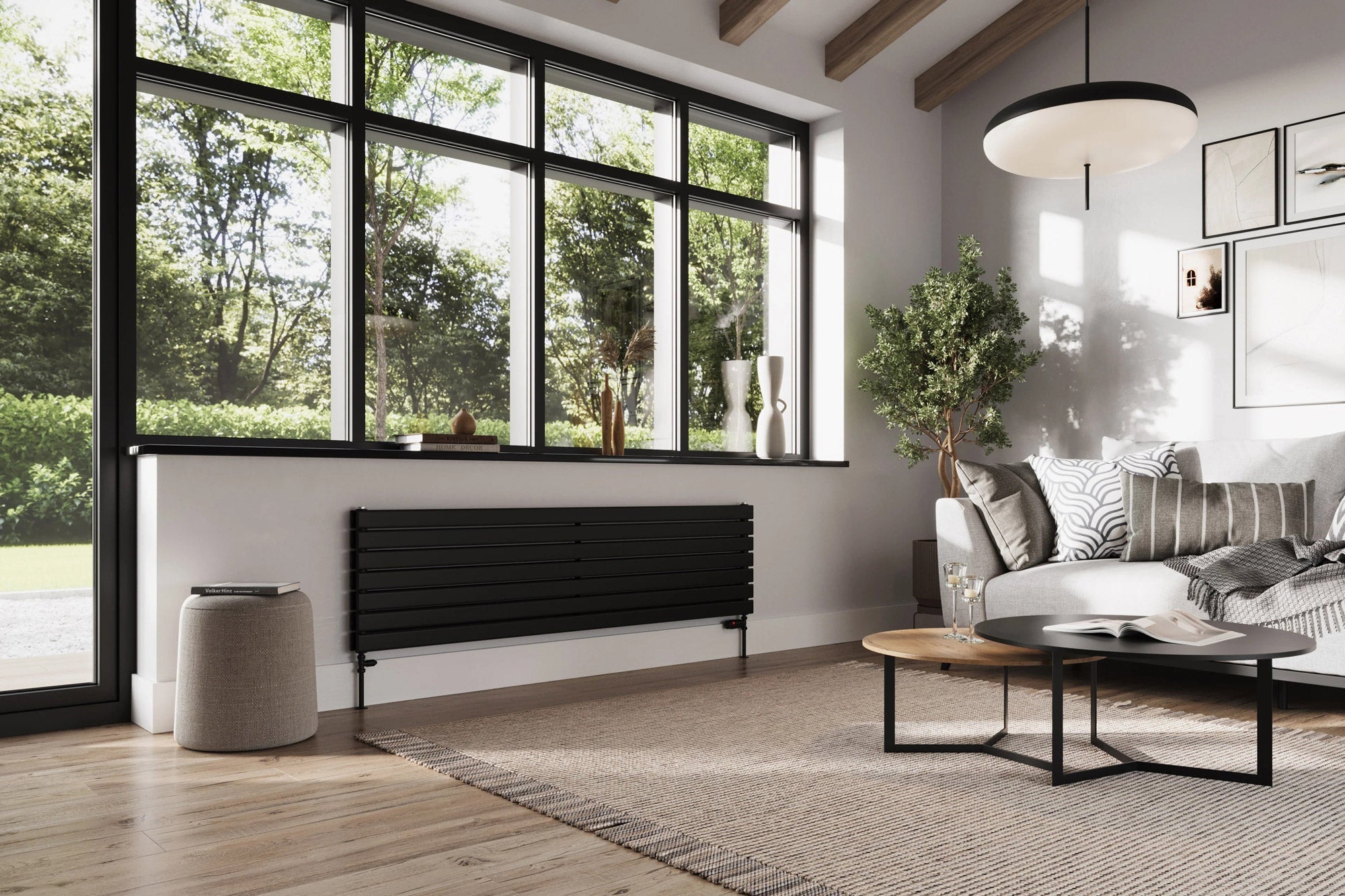


Why this trend dominates
-
Many modern homes — especially new builds, apartments and renovated lofts — follow minimalist or Scandinavian-inspired design philosophies. Cleaner walls, neutral colour palettes, open-plan layouts, minimal clutter. In such settings, bulky, traditional radiators feel out of place. justradiators.co.uk+2bestheating.com+2
-
Minimal radiators with flat panels or slim vertical profiles integrate seamlessly. Their “invisible heating” approach keeps the interior visually light, uncluttered, and balanced. geyser.co.uk+1
Functional benefits beyond looks
-
Slimline designs often use efficient materials (like aluminium) that heat up fast. Their lower water content means quicker response times compared with traditional cast-iron units — beneficial if you heat intermittently or use a heat pump / electric heating. designerradiatorshowroom.co.uk+1
-
Minimalist radiators free up wall space for furniture, artwork, or windows — a big plus in smaller homes, flats, or open-plan layouts. geyser.co.uk+1
-
They tend to pair very well with modern building standards: better insulation, double/triple glazing, open-plan layouts — all of which reduce heat demand and make a slim/heavy-duty radiator overkill.
When they make sense
-
In apartments, studios, and flats with limited wall space.
-
In living rooms or spaces with minimalist décor (white/neutral palettes, clean geometry).
-
As part of an electric-heating or heat-pump based system where a quick heat-up/time-to-temperature matters.
## 2.2 Vertical & Space-Saving Radiators — “Height over Width”


Why vertical radiators are trending
-
Vertical radiators make clever use of height — they take up far less horizontal wall space. That’s ideal when walls have windows, doors, furniture — i.e. most realistic modern spaces. Kunstplaza+2royalbathrooms.co.uk+2
-
Designers use vertical radiators to create visual height and architectural rhythm: rooms seem taller, ceilings higher, interiors more elegant and sculptural. Kunstplaza+1
-
They’re extremely space-efficient — useful for hallways, narrow rooms, kitchens, bathrooms, or open-plan layouts where every centimetre counts. royalbathrooms.co.uk+2termaheat.pl+2
Heat & efficiency benefits
-
Many modern vertical models achieve high output despite their slim profile — tall surface area can produce enough heat to warm rooms effectively. Elegant Radiators+2designerradiatorshowroom.co.uk+2
-
Vertical orientation can improve convection: as warm air rises, tall radiators help distribute heat more evenly from floor to ceiling — good for large rooms or high-ceiling spaces. Kunstplaza+1
-
For retrofit projects (e.g. replacing old horizontal radiators), vertical models often allow reuse of existing pipework while freeing up wall/floor space — making them a practical, efficient upgrade. designerradiatorshowroom.co.uk+1
Best use cases
-
Hallways, narrow corridors, or rooms with limited wall width.
-
Apartments or flats where furniture placement and layout flexibility matter.
-
Spaces with high ceilings, or where visual “verticality” is desirable.
-
Projects aiming for a balance between heating performance and flexible layout design.
## 2.3 Statement & Sculptural Radiators — Heating as Art / Architecture
-
According to industry sources, 2025 is framed as “the coming out party” for designer radiators — no longer hidden under windows, but celebrated as part of interior design. bestheating.com+1
-
Radiators now come in bold shapes — wave-forms, geometric patterns, asymmetric layouts, sculptural tubes or panels — designed to be focal points. Elegant Radiators+1
-
This appeals to homeowners who want interiors with personality: heating becomes not just functional heat, but part of their design identity, a conversation piece, part of the décor.
Functionality behind the design
-
Many of these radiators, despite their unusual forms, use advanced engineering (finned profiles, increased surface area, efficient materials) to match or beat traditional radiator heat outputs. Elegant Radiators+1
-
Some even integrate dual functionality — e.g. a radiator that doubles as a towel rail, or features shelving/mirror-backed panels, making them both practical and decorative. Elegant Radiators+1
-
For homes where style matters as much as substance (e.g. boutique apartments, renovated heritage homes, show-home interiors), statement radiators give warmth and visual impact.
When this trend shines
-
Living rooms or open-plan areas where the radiator becomes part of the décor.
-
Homes with designers/owners who value uniqueness — bold décor, colourful interiors, or high-end finishes.
-
Projects where heating is electric or low-carbon, meaning radiator shape and finish are not constrained by bulky boiler pipework.
## 2.4 Finish, Colour & Material Trends — From Neutral to Bold
What’s trending in finishes and materials
-
Anthracite, matt black, metallic (brushed steel / brass / copper), and custom RAL colours are among 2025’s hottest radiator finishes — far beyond traditional white. bestheating.com+2Elegant Radiators+2
-
Designers are choosing finishes that integrate with overall interior palettes: dark radiators against light walls for contrast, metallics for industrial or luxe aesthetics, soft colours for warmth or playful décor. bestheating.com+1
-
Materials have improved: modern radiators use aluminium, stainless steel, powder-coated steel or other premium metals, allowing sleeker shapes, better thermal performance, and long-term durability. Elegant Radiators+1
Why these choices matter
-
Heat output & efficiency: metals like aluminium or stainless steel often give quicker warm-up times and efficient heat transfer — matching well with modern heating systems or electric heating. designerradiatorshowroom.co.uk+1
-
Durability and maintenance: powder-coated steel or treated metals resist corrosion, maintain finish over time, and stand up to use in bathrooms and kitchens — a big plus compared with older, painted radiators. Elegant Radiators+1
-
Design flexibility: With a broad palette of colours and finishes, homeowners and designers can match radiators to furniture, wall colours, metalwork, or overall style themes — integrating heating into the interior, not just bolt it on.
How to choose the right finish/material
-
For minimalist or Scandinavian interiors → matte white, light grey, subtle metallic.
-
For modern/industrial interiors → anthracite, matt black, brushed steel.
-
For statement interiors or feature walls → bold colours, brass, copper, two-tone radiators.
-
For bathrooms or kitchens → stainless steel or moisture-resistant finishes; possibly dual-fuel towel radiators.
## 2.5 Bathroom & Towel Radiators: From Utility to Spa-Style Luxury
How bathrooms have changed — and why radiators must evolve
-
Bathrooms are less utilitarian and more spa-like in modern homes. Designers and homeowners increasingly demand warmth, comfort, and stylish aesthetics — even in bathrooms. bestheating.com+2termaheat.pl+2
-
As homes shift to electric heating and away from bulky central-heating pipework, wall-mounted towel / bathroom radiators have become easier to install and more versatile. Elegant Radiators+1
What’s trending in towel & bathroom radiators
-
Sleek ladder designs, curved or D-shaped profiles, flat-panel minimal radiators adapted for bathrooms, and electric-only towel radiators. Elegant Radiators+1
-
Finishes that complement bathroom fixtures: matt black, chrome, brushed steel, metallic finishes. Combined with neutral, pastel, or tile-based interiors for a balanced look. bestheating.com+1
-
Dual-purpose radiators: warming towels and the room, sometimes with mirror or shelving integration, turning a radiator into a multi-functional fixture. Elegant Radiators+1
Why this matters
-
Bathrooms often have limited space. Slim, wall-mounted radiators free floor space and avoid interfering with fixture layout.
-
Electric or dual-fuel towel radiators simplify retrofits — no need to extend central heating circuits.
-
A well-chosen towel radiator improves comfort (warm towels, warm floors) and adds to the bathroom’s design narrative — aligning with modern home design where even utility rooms are styled.
What This Means for Homeowners in 2025 — Practical Takeaways
-
Heating is now a design choice, not a compromise. With modern radiators you don’t have to choose between style and warmth — you can have both.
-
Match radiator style to your décor vision. Whether minimal, industrial, modern, or luxurious, there’s a radiator style and finish to fit.
-
Vertical and slimline radiators maximize flexibility. Great for apartments, open-plan homes, or rooms with limited wall/floor space.
-
Statement radiators double as décor. If you want a bold design feature, heating can be part of the art — not hidden behind furniture.
-
Bathroom comfort and style no longer mutually exclusive. Towel radiators in 2025 are equally about design as utility.
-
Upgrading heating doesn’t have to be ugly. Retrofit homes can benefit from modern radiators that integrate seamlessly without compromising output or efficiency.
Why These Trends Matter for Geyser — and You
As a provider of modern heating solutions, Geyser is perfectly positioned to support these 2025 trends:
-
We stock and supply vertical, minimalist, designer, electric, towel, and statement radiators — so clients don’t have to compromise.
-
Our products combine efficient heating performance with modern design, matching the demands of today’s stylish, energy-conscious homeowners.
-
We understand that heating is part of the overall home aesthetic — and we can advise on matching radiators to your interior style, room function, and heating requirements.
-
For homes moving away from gas towards electric heating or heat pumps, modern radiators provide both efficiency and versatility.
3. Functionality: More Than Just Looks
Designer radiators are beautiful—but beauty without performance is useless. Modern heating prioritises function first, including:
3.1 High Energy Efficiency
Electric designer radiators in 2025 feature:
-
Faster heat-up
-
Smart thermostatic control
-
Improved thermal retention
-
Multi-layered insulation
-
Adaptive power modes
These features ensure excellent heat output without energy waste.
3.2 Smart Home Integration
Smart heating is now the standard, not the exception. Designer radiators can integrate with:
-
Google Home / Alexa
-
WiFi & app-based controls
-
Zoned heating systems
-
Geofencing (heat when you arrive home)
-
Energy usage analytics
Stylish heating that learns your routine.
3.3 Ultra-Precise Room Control
Electric designer radiators offer room-by-room control for:
-
Bedrooms
-
Bathrooms
-
Open-plan living
-
Guest rooms
-
Home offices
You only heat the spaces you actually use—cutting energy waste dramatically.
3.4 Durability & Low Maintenance
Modern designer radiators are engineered for:
-
Zero annual servicing (electric models)
-
Anti-corrosion coatings
-
Higher-grade materials (e.g., aluminium, stainless steel)
-
Long product lifespans
This makes them a practical long-term investment.
4. Designer Heating in Different Rooms: Best Options
4.1 Living Room
Choose:
-
Vertical slimline models
-
Statement radiators
-
White or anthracite finishes
Goal: Comfort + style in high-use areas.
4.2 Bedroom
Choose:
-
Low-noise electric radiators
-
Flat-panel minimalist designs
-
Soft, neutral colours
Goal: Calm atmosphere & steady warmth.
4.3 Bathroom
Choose:
-
Designer towel radiators
-
Curved or minimal ladder designs
-
Moisture-resistant coatings
Goal: Dry towels + warm bathroom air.
4.4 Kitchen
Choose:
-
Compact wall-mounted designs
-
Corner radiators
-
Slim vertical panels
Goal: Save floor and cabinet space.
4.5 Hallways & Entry Spaces
Choose:
-
Narrow vertical radiators
-
Contemporary sculpted styles
Goal: Heat small spaces without overpowering décor.
5. Sustainability: Designer Heating Can Be Eco-Friendly
Homeowners in 2025 want sustainable heating. Designer radiators now focus on:
✔ Electric efficiency
✔ Recyclable materials
✔ Lower CO₂ emissions
✔ Reduced energy consumption
✔ Smart optimisation
Electric designer radiators—especially those from Geyser—are ideal for homes moving away from gas to fully electric setups.
6. Choosing the Right Designer Radiator: Key Considerations
Before choosing a designer radiator, consider:
✔ Room size
BTU/KW output must match the space.
✔ Placement
Vertical? Horizontal? Under a window? Feature wall?
✔ Material
Aluminium = fast heat-up
Mild steel = excellent heat retention
Stainless steel = durability and style
✔ Energy type
Electric (ideal for 2025 homes)
Dual fuel (flexibility in bathrooms)
✔ Aesthetic match
Choose colours and styles that complement your interior palette.
✔ Smart control compatibility
Ensures efficient, automated heating.
7. Why Geyser Leads in Designer Heating for 2025 Homes
Geyser’s range of designer heating solutions stands out due to:
Exceptional heat performance
Premium designer aesthetics
Advanced electric technology
Smart home compatibility
High-quality finishes and materials
Long lifespans & minimal maintenance
Whether upgrading one room or designing a full home heating layout, Geyser offers modern solutions that blend beauty with performance.
Conclusion: Designer Heating Is the Future of Home Comfort
In 2025, heating is no longer hidden behind furniture—it’s part of the home’s design language. Homeowners now expect radiators that:
-
Look modern
-
Perform exceptionally
-
Complement their interior style
-
Offer smart control
-
Reduce energy waste
-
Provide long-term value
Designer radiators from Geyser deliver all of this and more—proving that function and aesthetics can exist in perfect harmony.
Comment(s)